Services
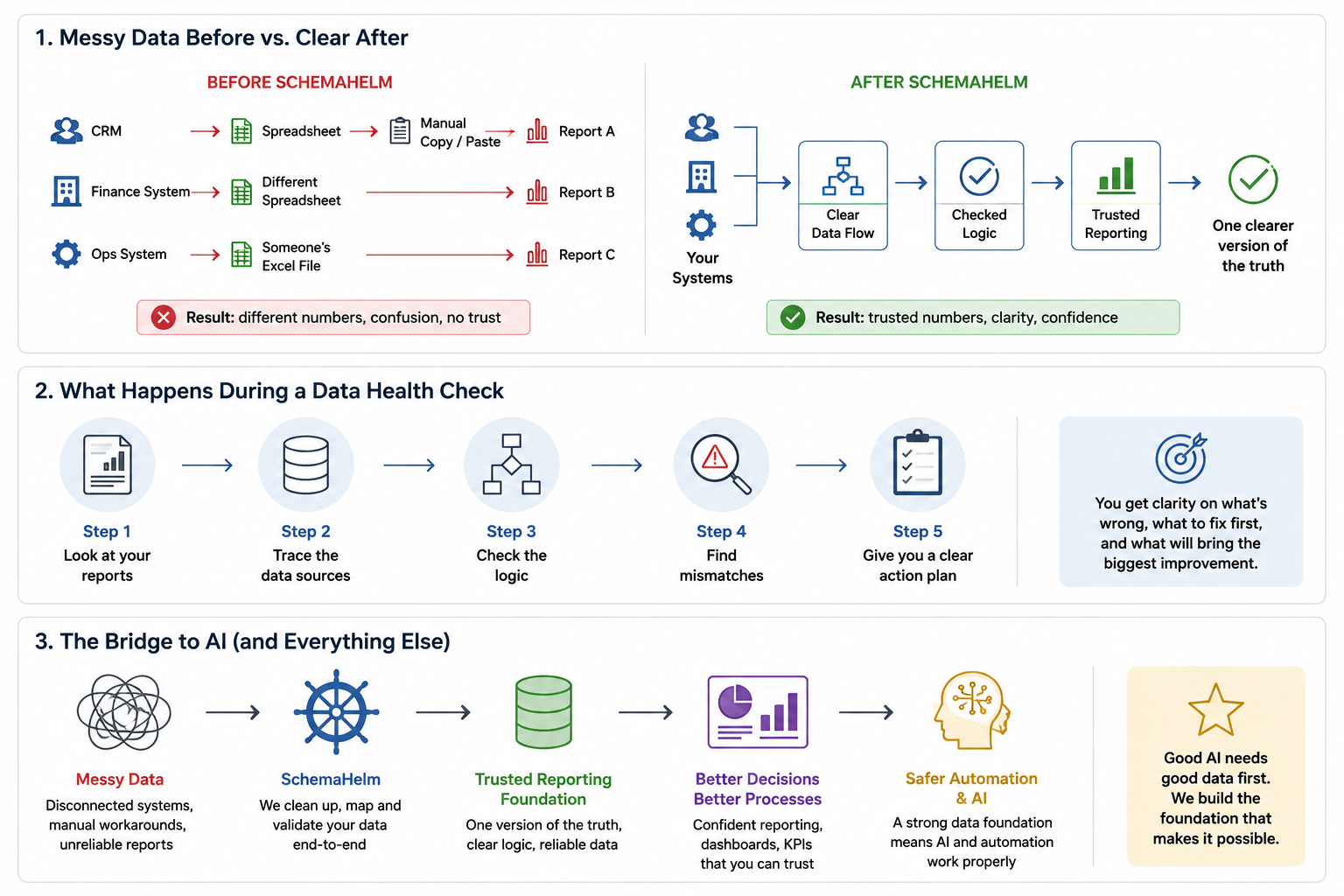
SchemaHelm provides practical support for businesses dealing with unreliable reporting, unclear data flow, disconnected systems, spreadsheet workarounds and fragile reporting logic.
The focus is on understanding where reporting problems come from, why different outputs do not agree and what should be fixed first.
SchemaHelm works across databases, spreadsheets, structured data extracts and reporting processes, with current core expertise in SQL Server, PostgreSQL, SQL reporting logic, Excel and data-flow analysis.
How SchemaHelm approaches messy reporting problems
SchemaHelm does not begin by guessing or recommending a new platform.
The work starts by understanding where your data originates, how it moves, where it changes and why reports, dashboards or spreadsheets may be showing different answers.
The aim is to give your business:
a clearer view of the problem
an explanation of the underlying causes
a prioritised action plan
stronger foundations for trusted reporting
better preparation for future automation and AI
Messy Data Diagnostic
A focused investigation into where reporting confusion, inconsistency, duplication and risk are coming from.
This service helps with:
conflicting reports and inconsistent numbers
duplicate, missing or invalid records
inconsistent categories or business definitions
spreadsheet workarounds and manual fixes
weak validation and reporting controls
hidden reporting risks and weak processes
Why it matters:
When reporting problems are not clearly understood, businesses often spend time correcting individual outputs without addressing the underlying cause.
Outcome:
A clear summary of the main problem areas, likely causes, key risks and recommended priorities for further investigation or remediation.
Schema & Data Flow Mapping
A structured view of how data moves between source systems, databases, tables, files, spreadsheets, reports and manual processes.
This service can help with:
identifying source systems and reporting dependencies
understanding how data moves and changes
locating manual intervention and uncontrolled adjustments
exposing fragile handoffs between systems or teams
documenting important transformations
identifying potential sources of truth
Why it matters
When the reporting journey is unclear, business logic becomes harder to explain, maintain and trust.
Important knowledge may also become concentrated in one person or remain undocumented.
What you receive
Depending on the agreed scope, this may include:
a mapped reporting or data flow
key system and process dependencies
identified transformation points
areas of manual risk
source-of-truth recommendations
priorities for documentation or improvement
REPORTING RECONCILIATION AND LOGIC REVIEW
A detailed review of why reports, dashboards or spreadsheets do not match and where their underlying logic begins to diverge.
This service can help with:
mismatched metrics and conflicting outputs
different definitions of the same measure
unclear joins, filters or calculations
duplicated or excluded records
inconsistent date logic
manual spreadsheet adjustments
SQL and reporting logic that is difficult to explain or maintain
Why it matters
When key reports disagree, confidence drops and decision-making becomes slower, riskier and more dependent on manual checking.
What you receive
Depending on the agreed scope, this may include:
a reporting discrepancy register
an explanation of where figures diverge
identified differences in logic or definitions
recommended metric definitions
source-of-truth guidance
a prioritised remediation plan
AI DATA-READINESS ASSESSMENT
An assessment of whether the data and reporting foundations beneath a proposed AI or automation initiative are sufficiently clear, reliable and controlled.
This service can help with:
unclear or inconsistent business definitions
undocumented data sources
weak data quality controls
inaccessible or fragmented data
reporting logic that cannot be confidently explained
uncertainty about which data should be used
identifying risks before an AI project begins
Why it matters
AI tools cannot create trustworthy results from data that is poorly understood, inconsistently defined or unreliable.
Starting with the foundations can reduce risk, wasted investment and false confidence in automated outputs.
What you receive
A practical assessment of current readiness, key risks, information gaps and the work required before progressing with a proposed AI or automation use case.
This service focuses on assessment and roadmap development rather than advanced AI implementation.
WORKING ACROSS THE REPORTING CHAIN
SchemaHelm can investigate problems involving:
SQL Server and PostgreSQL
SQL reporting logic
Excel and manual reporting processes
structured data extracts and CSV files
database schemas and relationships
reporting definitions and calculations
data moving between business systems
data-quality and validation issues
Other systems and reporting environments can be assessed during an initial discussion to determine whether SchemaHelm is the right fit.
Where specialist platform engineering, security or implementation work is required, SchemaHelm will identify that clearly and help define the appropriate next step.
Not sure which service fits?
You do not need to diagnose the problem before getting in touch.
If you are dealing with conflicting reports, unclear data flow, disconnected systems, spreadsheet workarounds or reporting logic that is becoming harder to trust, briefly describe what is happening.
SchemaHelm can help determine the most appropriate starting point.